Commercial Building Upkeep: A Simple Exterior Schedule
Commercial building upkeep for North Georgia properties: what to clean, how often, and what to ask a contractor about hours, insurance and wash water.
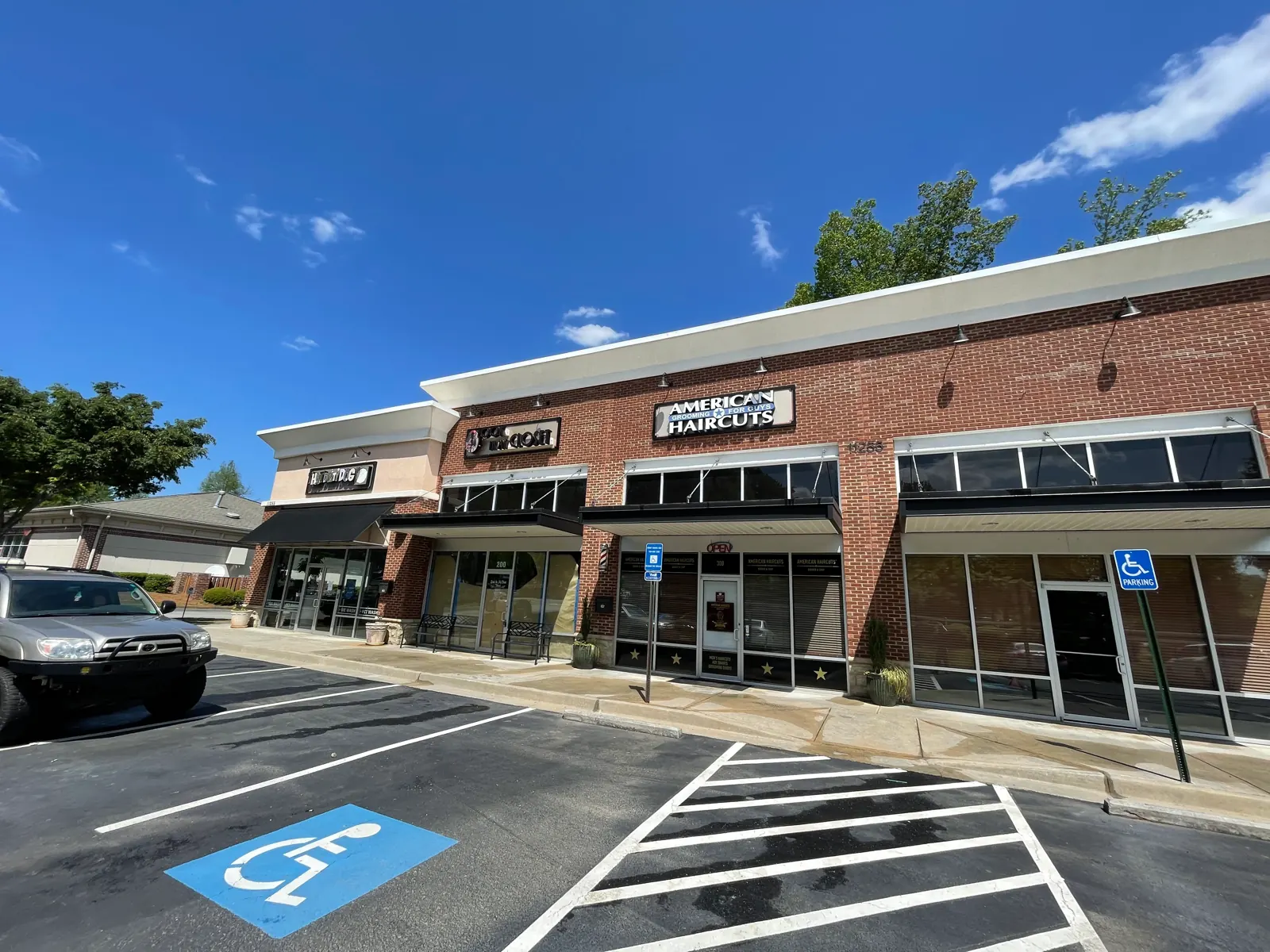
Most commercial building upkeep money goes to things that break: the HVAC unit, the roof leak, the pothole by the entrance. Exterior cleaning usually waits until a tenant complains or a board member sends a photo. By then the sidewalk is black, the dumpster pad smells, and the job costs more than it would have on a schedule.
We think that is backwards. Cleaning is maintenance, not decoration. This guide lays out what to clean on a commercial property in North Georgia, how often, and what to ask a contractor before anyone pulls a hose.
Why cleaning belongs in the maintenance budget
Three reasons, and only one of them is looks.
Safety. Algae on a shaded walkway and grease near a restaurant door are slip hazards. Federal workplace rules say walking surfaces must be "kept in a clean, orderly, and sanitary condition" (OSHA 1910.22). That rule is written for employers, but it is a fair standard for any path your tenants and their customers use.
Surface life. Mildew and algae hold moisture against paint, stucco, wood and roofing. Left alone, the growth outlasts the finish. Washing it off is cheaper than repainting early.
Leasing. People judge a property from the parking lot. A clean entrance tells a prospective tenant the rest of the building is looked after too.
A commercial building upkeep schedule by surface
Use this as a starting point. Shade, trees, foot traffic and food service all shorten the timeline.
| Surface | How often | What it needs |
|---|---|---|
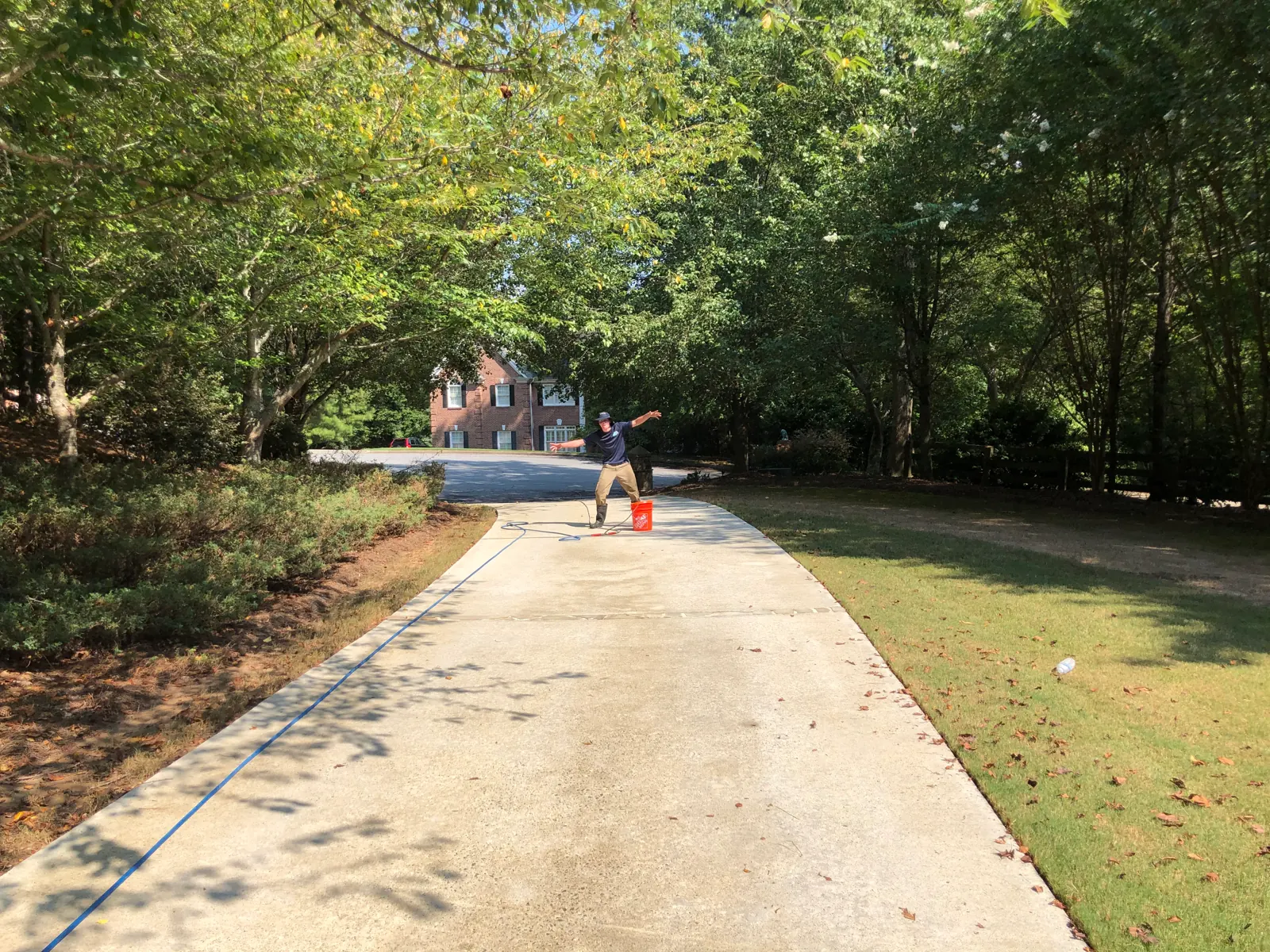
| Entry sidewalks and storefront walks | Every 3 months; monthly for busy restaurants | Pressure washing with a surface cleaner, gum removal |
| Dumpster pads and drive-thru lanes | Every 1 to 3 months | Degreaser, then pressure washing |
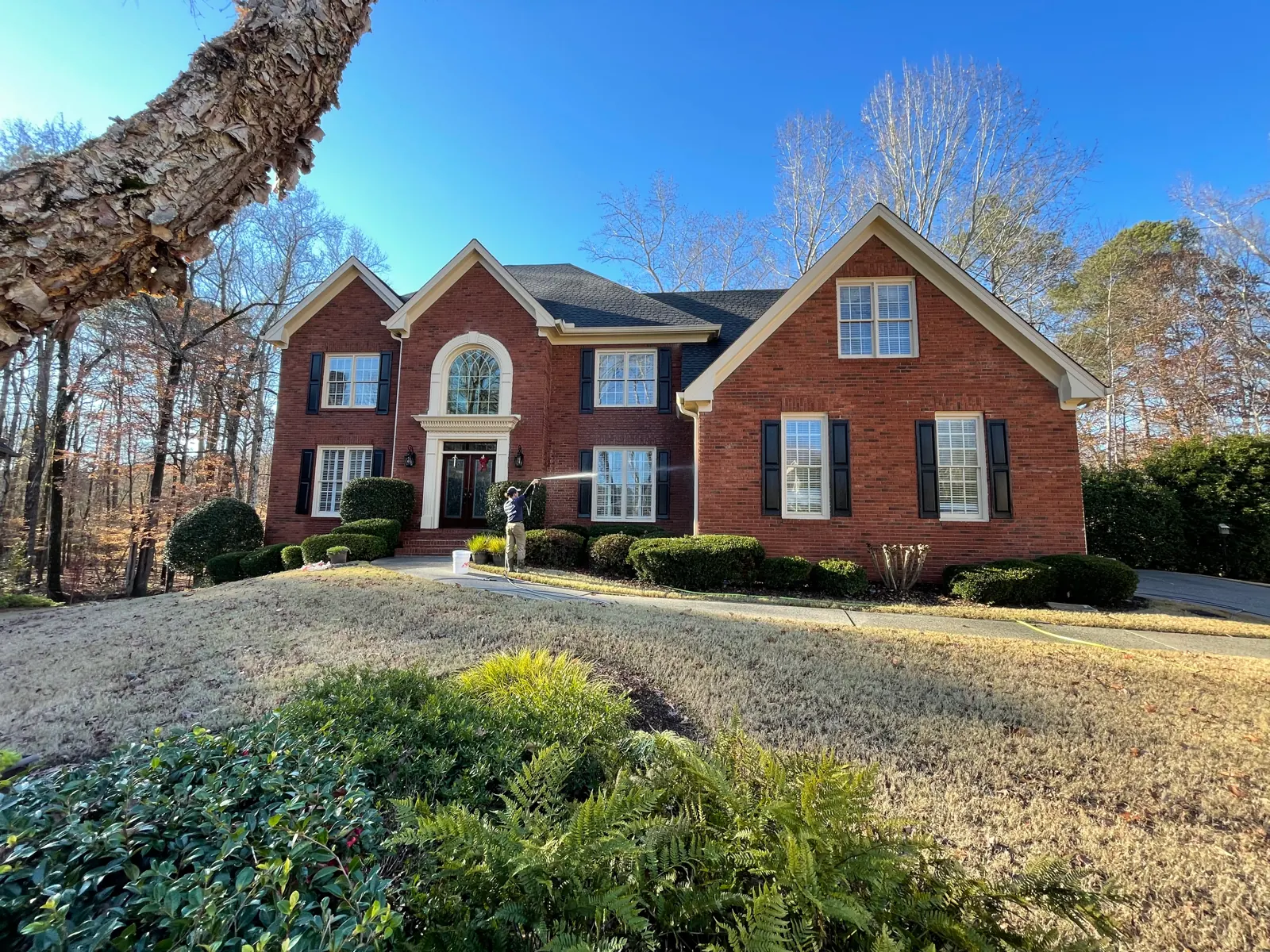
| Building facade: brick, block, stucco, siding, metal | Once a year | Soft washing with low pressure and detergent |
| Covered entries and breezeways | Twice a year | Soft wash overhead, pressure wash the concrete |
| Parking decks and loading docks | Once or twice a year | Degreasing and pressure washing |
| Monument signs and entrance walls | Once a year | Soft washing |
| Gutters and downspouts | Twice a year; more under trees | Clean out and flush |
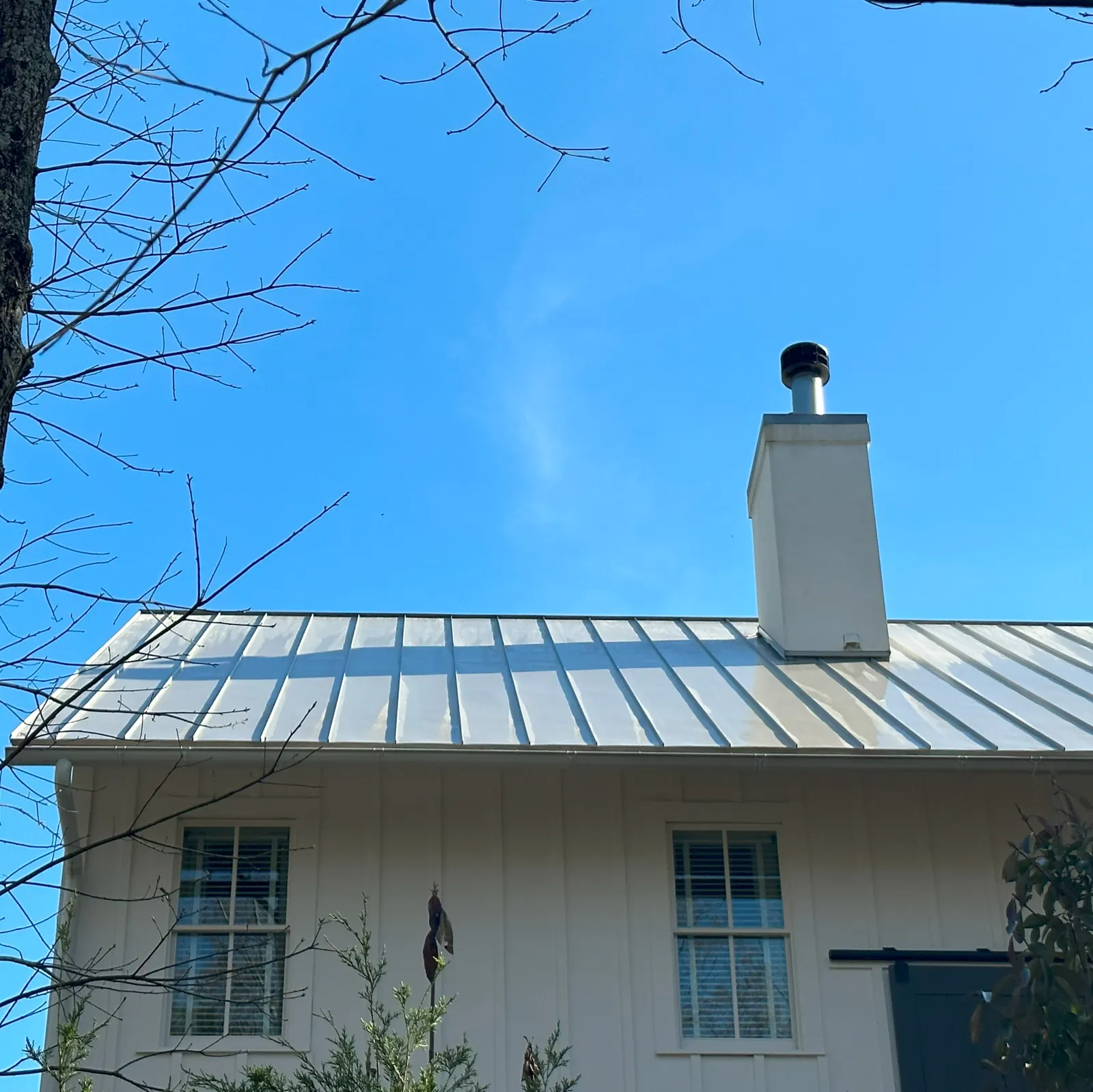
| Shingle or metal roofs | When dark streaks appear | Soft washing only |
North Georgia humidity is the reason these numbers are shorter than what you may see in a national checklist. Algae grows fast on the north side of a building and anywhere irrigation hits a wall.
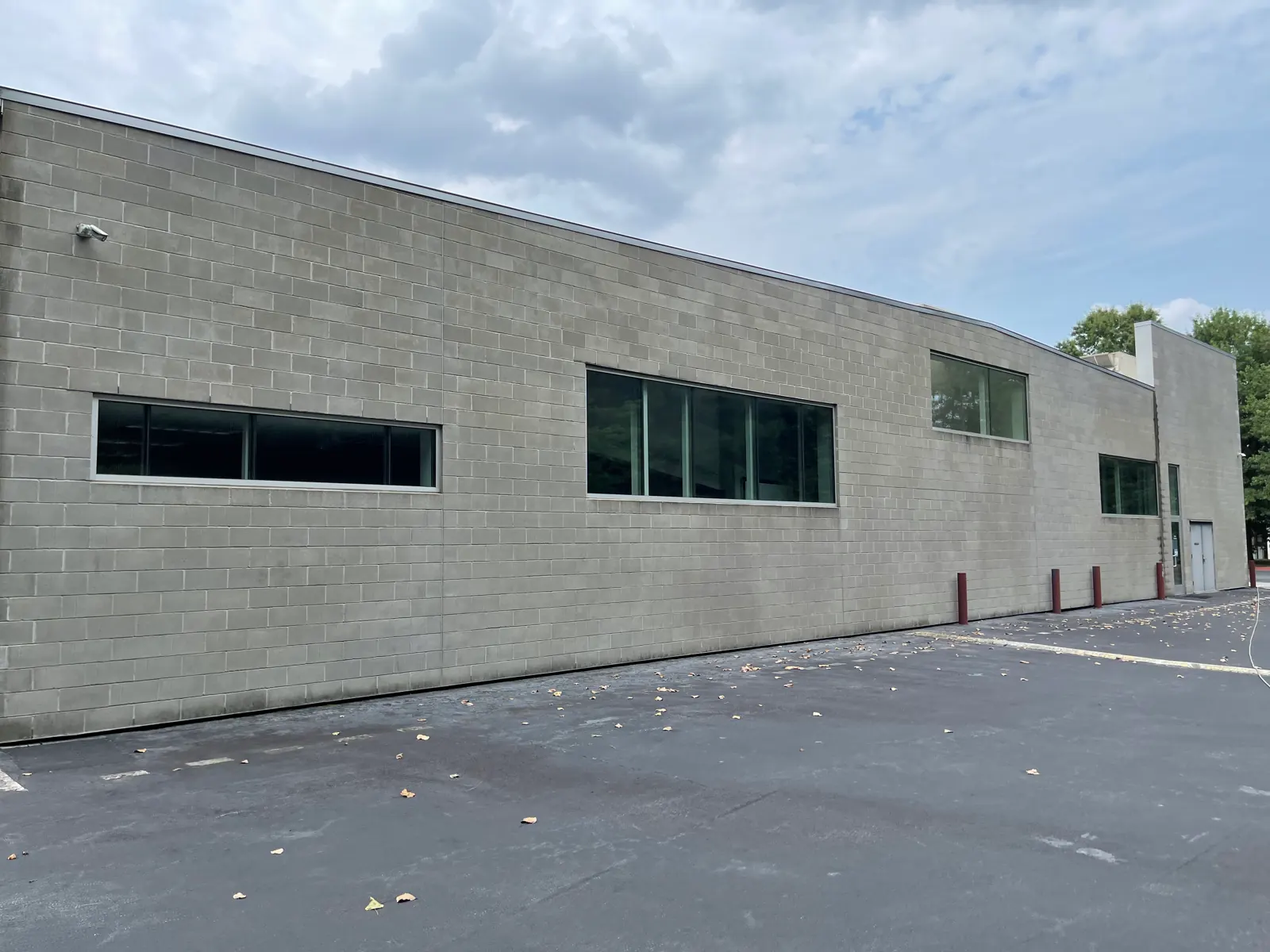
More pressure is not a better clean
This is the most common mistake we see on commercial jobs. Concrete can take high pressure. Most other surfaces cannot.
Painted block, stucco, EIFS and siding need a soft wash. That means a cleaning solution applied at low pressure, left to work, then rinsed. High pressure on those surfaces strips paint, scars the finish and pushes water behind it.
Roofs are the clearest example. The Asphalt Roofing Manufacturers Association puts it in capital letters: "DO NOT use a power washer" to clean algae from a shingle roof, because high pressure is likely to damage the roofing (ARMA technical bulletin).
A restaurant shows how the two methods work together. At Village Burger in Cumming, our crew pressure washed the sidewalk along the brick storefront and sanitized the outdoor furniture so guests had a clean place to sit.
Schedule around your tenants
A wet sidewalk at lunch hour is a problem you paid to create. Good commercial cleaning happens when nobody is there.
Most of our retail and office work is done overnight or before 7 AM, so walkways are dry and open when doors unlock. For HOAs, we supply notices residents can read ahead of time, including guidance for pets and plants.
Ask any contractor how they will keep accessible routes and main entrances usable while they work. If the answer is vague, expect phone calls from tenants.
Ask where the wash water goes
Dirty wash water carries oil, grease, detergent and grit. In many places it is not allowed to run into a storm drain.
Gwinnett County, for example, tells businesses that "the best method for surface cleaning is to collect the wash water generated and to dispose of it in an indoor drain" (Gwinnett County stormwater guidelines). The county's surface cleaning guideline lists penalties of up to $1,000 and/or 60 days in jail for illegal discharges (Gwinnett County guideline, PDF). The EPA explains why it matters: unlike wastewater that goes to a treatment plant, stormwater generally flows to waterways without any additional treatment (EPA fact sheet, PDF).
Rules differ by city and county, so check before work starts. If your property or municipality has drainage or containment requirements, tell us when you request a quote and we will scope them into the job.
What to ask before you hire
- Can you send a certificate of insurance naming the property or the management company?
- Is the quote based on measured square footage, with the assumptions written down?
- Will I get before-and-after photos for my files?
- What hours will the crew work, and how will tenants be notified?
- Which surfaces get pressure and which get a soft wash?
- What is the plan for wash water near storm drains?
A contractor who answers all six in writing is one you will not have to manage.
Put it on the calendar
The cheapest way to handle commercial building upkeep is a recurring plan: quarterly, twice a year or annual, with one point of contact. Stains never get a year's head start, and the cost is the same line in the budget every time.
Hydro Dynamic ESC has been family-run since 2004 and cleans commercial properties across Cherokee, Forsyth, North Fulton, Cobb and Gwinnett. Send us the address and we will return a budgetary quote with clear assumptions, usually within two business days. Firm pricing follows a site walk.
Request a budgetary quote or see what we maintain on the commercial and HOA page.